
DNA double-strand breaks can lead to the appearance of translocations, which result from the exchange of genetic material between two chromosomes. Translocations can cause cancers, but they can also be the consequence of chemotherapy treatments, thereby generating secondary tumours. The formation of translocations within our genome is still poorly understood, even though it is known to involve the spatial clustering of two breaks.
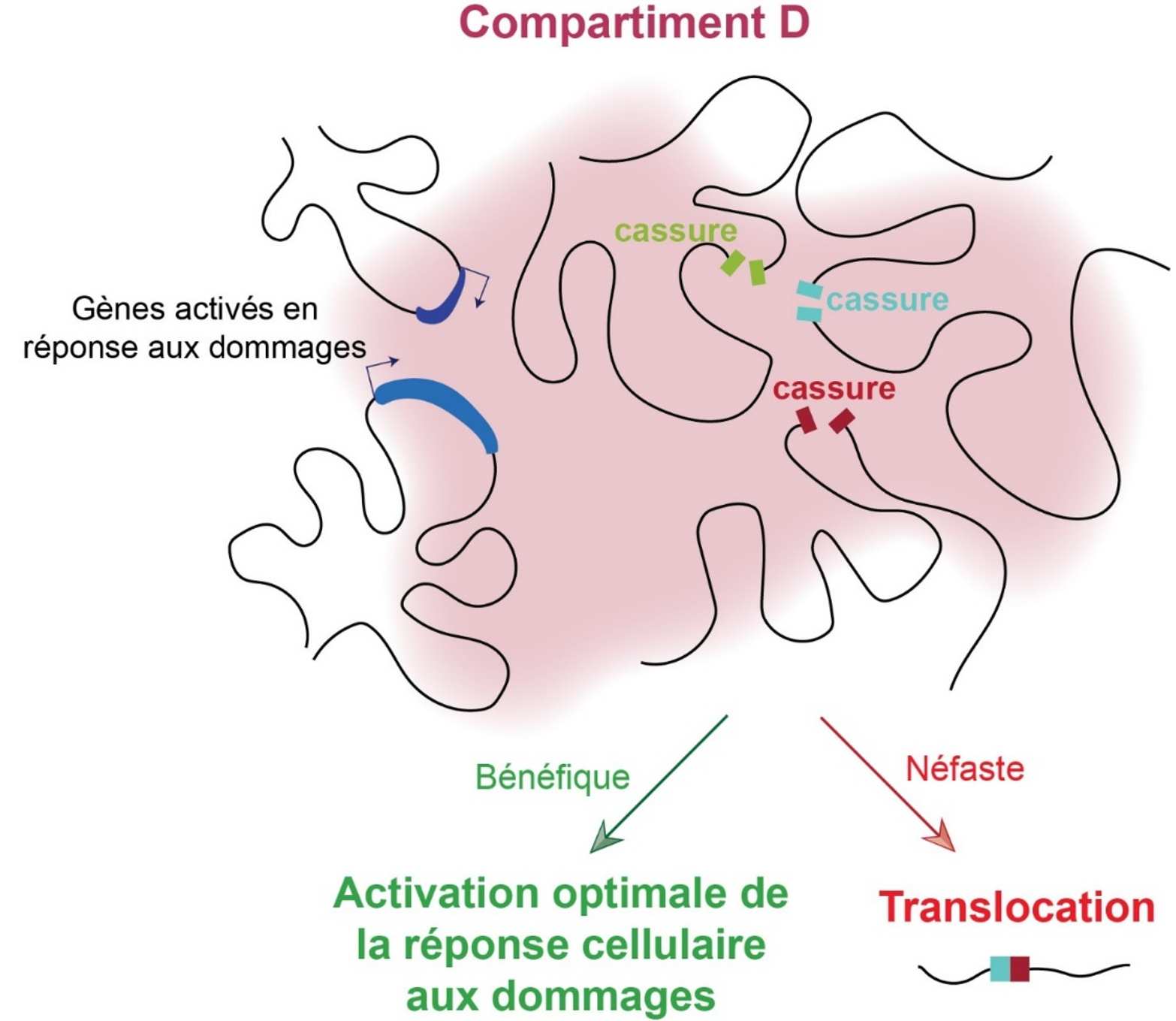
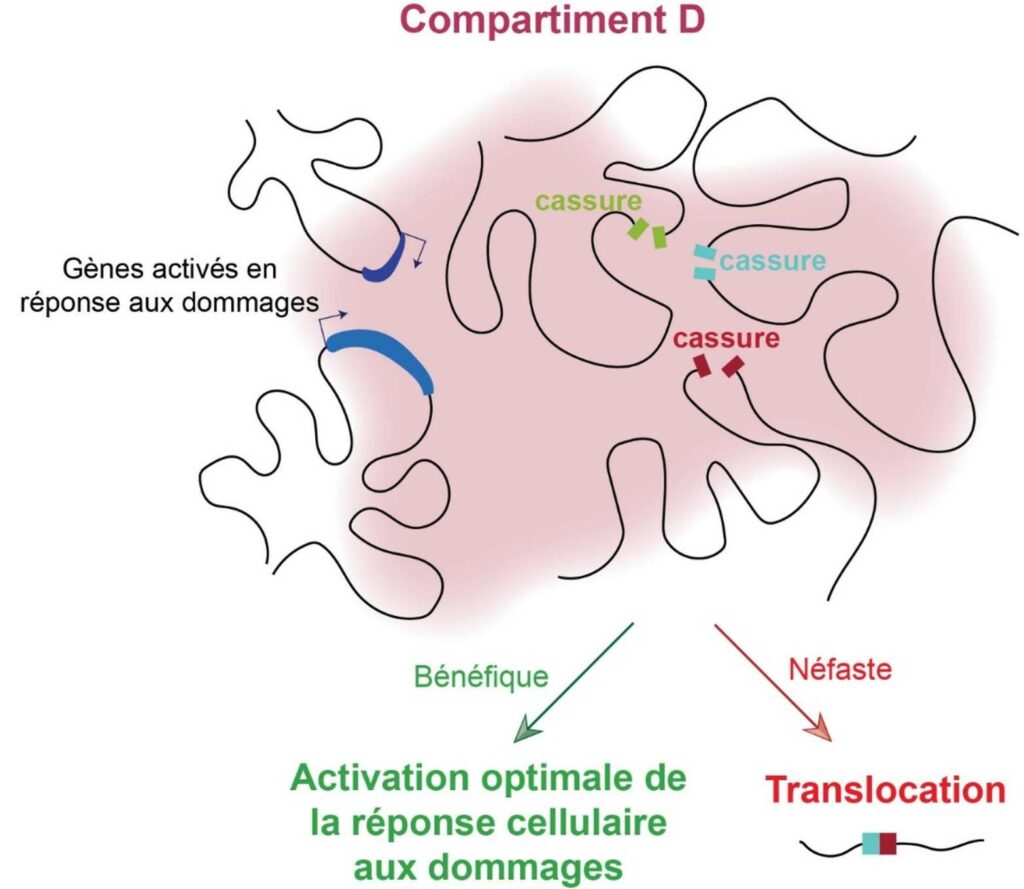
By studying double-strand break repair and the three-dimensional organisation of our genome, Gaelle Legube’s team at the CBI has demonstrated that, following the appearance of breaks, our DNA undergoes organisational changes in its structure. In particular, double-strand breaks lead to the formation of a new chromatin compartment called the D compartment. This compartment contains different breaks that cluster together in the same place, which promotes the occurrence of translocations with detrimental effects on genome stability. However, this D compartment also brings together certain genes that play a vital role in signalling the presence of damage to the cell. The presence of these genes in this D compartment would facilitate their activation, thereby enabling the cell to respond effectively to the threats posed by double-strand DNA breaks. Thus, the cell would have a selective advantage in maintaining this D compartment.
This study sheds light on our understanding of the impact of the three-dimensional organisation of our DNA on the mechanisms that the cell sets up to cope with the danger caused by double-strand DNA breaks. But the flip side of the coin is that this organisation can occasionally lead to adverse effects for the cell by generating chromosomal translocations, which are deleterious events at the origin of cancers.
Publication
Chromatin compartmentalization regulates the response to DNA damage – Coline Arnould#, Vincent Rocher#, Florian Saur, Aldo S. Bader, Fernando Muzzopappa, Sarah Collins, Emma Lesage, Benjamin Le Bozec, Nadine Puget, Thomas Clouaire, Thomas Mangeat, Raphael Mourad, Nadav Ahituv, Daan Noordermeer, Fabian Erdel, Martin Bushell, Aline Marnef, and Gaëlle Legube, Nature 2023
Article published as part of the highlights GENOTOUL