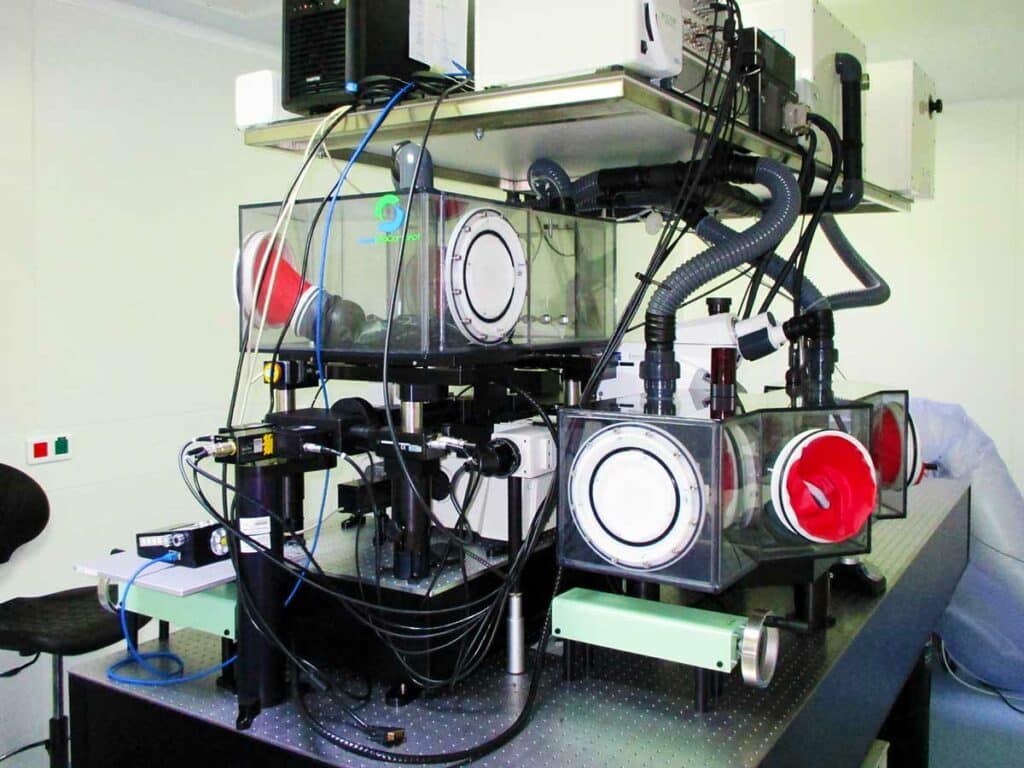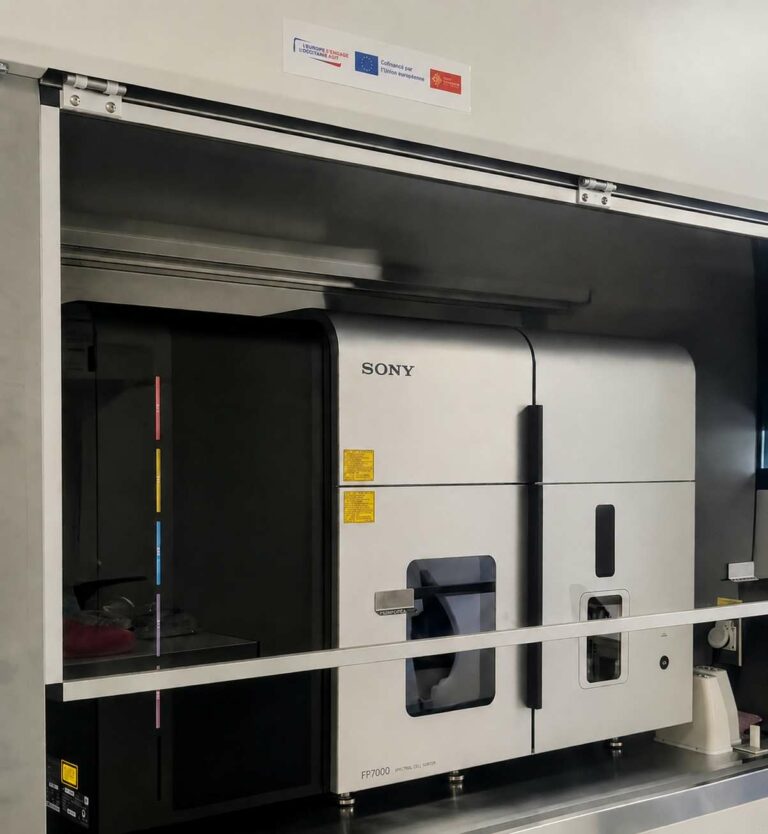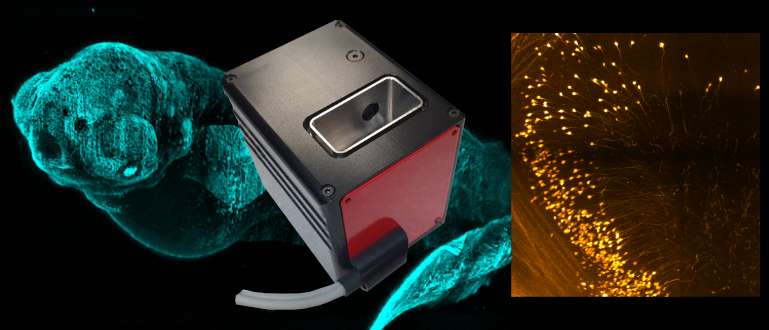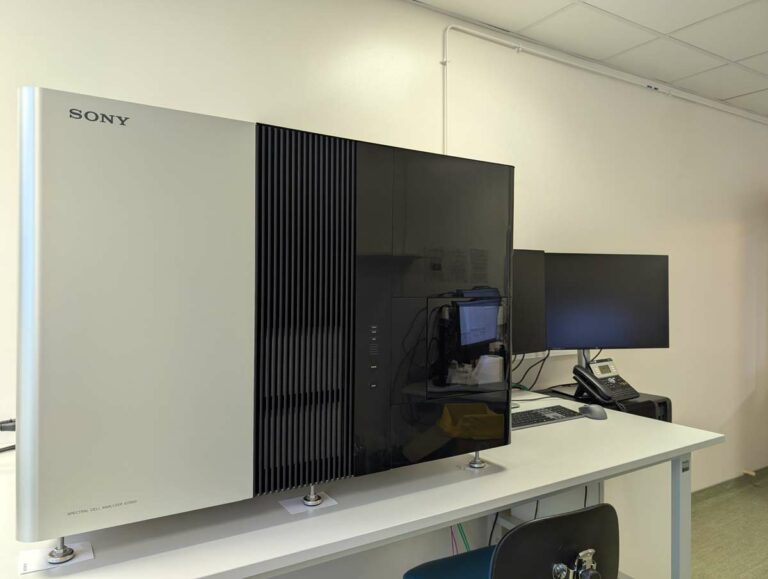


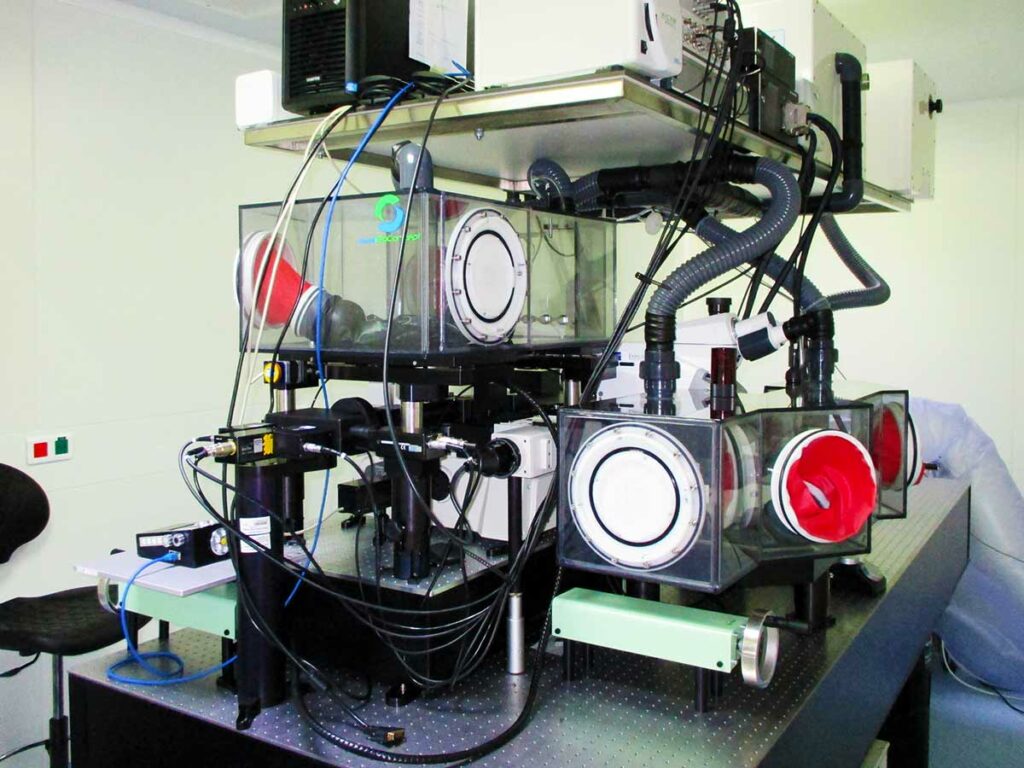
 The result of a collaboration between IPBS engineers, the company Eurobioconcept and equipment manufacturer LaVision BioTec, this tool has been custom-designed to meet the stringent requirements of biosafety level 3 containment. In addition to its adapted components, its positioning within the platform allows the observation of live samples containing level 3 pathogens, such as Mycobacterium tuberculosis. To meet the specific needs of intravital imaging in small animals, this microscope, which can switch between upright and inverted observation, is further equipped with a volatile anaesthesia device and system.
 The two-photon microscope remains one of the principal tools used for the observation of living matter. However, when the object of observation is a living sample containing human pathogens, biosafety level 3 containment imposes numerous technical constraints regarding the very design of such an instrument.
A collaboration between the company Eurobioconcept, Lavision Biotech and the engineers from the IPBS has made it possible to meet these standards. The samples are first transported in capsules and then inserted directly into the observation chamber, thus avoiding any contact with the operator. As a second safety barrier, even if the cages break, the resulting permanent negative pressure draws the pathogens towards an air filtration system where they are eliminated. The vaporisation of hydrogen peroxide as a disinfecting agent poses an additional constraint: this compound is indeed liable, through oxidation, to alter the components of the microscope, including its costly optics. It was therefore also necessary to fit them with custom-made watertight membranes. This option concerning the membranes is found at several points on the apparatus. Thus, several parts of the device, such as the laser, in order to be easily isolated for maintenance, are removable and protected in the same way.
The design of such equipment is costly and the range of needs is varied, alternately requiring direct or inverted microscopy observations. The tool, developed by Lavision Biotech, is consequently endowed with an original feature: it is capable of guiding the laser towards two different optical paths, enabling it to function as either an upright or an inverted microscope.