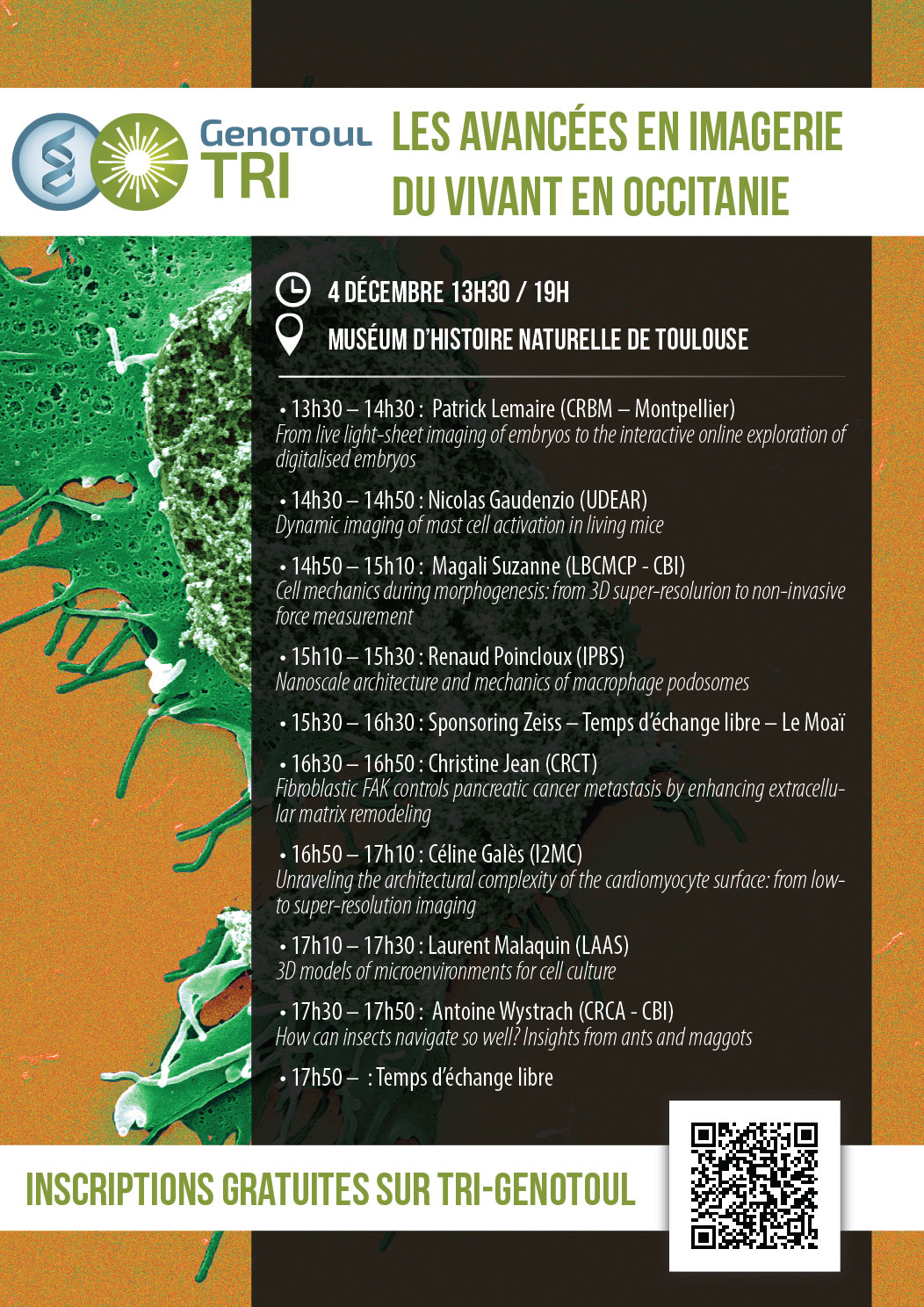
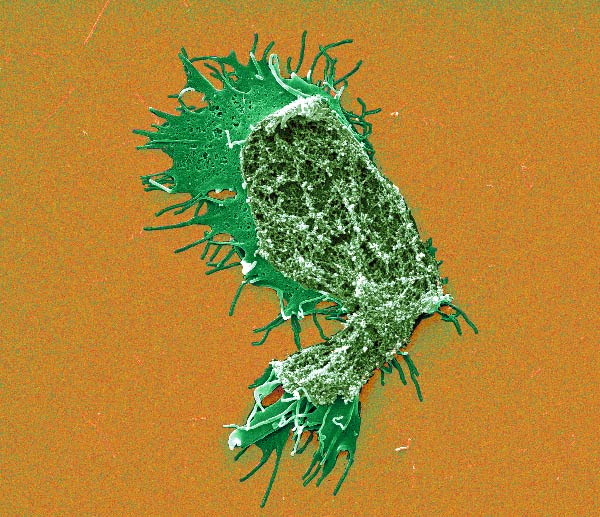
 Biological imaging is experiencing considerable growth, stemming from the synergy of skills among biologists, mathematicians, computer scientists, physicists and chemists. New equipment and methods are constantly emerging, enabling the observation of living functions in three dimensions, in real time, in depth, from the single molecule to the entire organism. Researchers track the trafficking or interactions of proteins of interest (Nobel Prize in Chemistry in 2008), localise molecules at nanoscopic resolution (Nobel Prize in Chemistry 2014), and determine the atomic structure of macromolecules (Nobel Prize in Physics 2017)... The field of application for imaging is immense. It concerns the entire animal and plant world, from microorganisms to humans, as well as all the processes that govern living things, from the earliest stages of an individual's development to senescence, in both normal and pathological situations.